文章导航PC6首页软件下载单机游戏安卓资源苹果资源

pc软件新闻网络操作系统办公工具编程服务器软件评测

安卓新闻资讯应用教程刷机教程安卓游戏攻略tv资讯深度阅读综合安卓评测

苹果ios资讯苹果手机越狱备份教程美化教程ios软件教程mac教程

单机游戏角色扮演即时战略动作射击棋牌游戏体育竞技模拟经营其它游戏游戏工具

网游cf活动dnf活动lol周免英雄lol礼包

手游最新动态手游评测手游活动新游预告手游问答

您的位置:首页单机游戏角色扮演 → 怪物猎人世界新装备介绍 怪物猎人世界新装备新系统一览

放牛班的春天

EconoScope | Powering AI era: Why China is betting on nuclear energy_我的网站

套路

一 |     (ECNS) -- The rapid growth of artificial intelligence is driving a new wave of electricity demand, putting nuclear power back in the spotlight.    China, which has the world's largest nuclear power capacity under construction, is accelerating the development of nuclear energy to provide reliable, low-carbon electricity for its growing economy and emerging AI industries.    According to the National Energy Administration, China has 112 nuclear units in operation or approved, with a combined capacity of 125 million kilowatts — the highest globally. Its nuclear capacity under construction also ranks first worldwide.        As China continues to expand its nuclear power fleet, which province leads the country in nuclear energy? And why is China stepping up investment in the sector?    Guangdong Province has emerged as China's nuclear leader. In the first half of 2026, its nuclear generation reached 57.31 billion kilowatt‑hours, supported by a complete industry chain spanning design, equipment manufacturing, construction and operation.    Guangdong has also developed a complete nuclear power industrial chain spanning design, equipment manufacturing, construction and operation.    The State Council recently approved the third phase of the Taipingling Nuclear Power Plant in Guangdong, marking another major step in the province's nuclear expansion following the approval of five nuclear power projects, including the Taishan project, last year.    With major nuclear power bases including Daya Bay, Ling'ao, Yangjiang, Taishan and Taipingling located along its coastline, Guangdong is expected to see nuclear power generation rise significantly as new units come online, helping meet growing electricity demand from industries such as AI and data centers.    Fujian Province, meanwhile, has the highest share of nuclear power in its electricity generation mix. Nuclear energy accounted for 28.1% of the province's total power generation, according to the NEA, meaning nearly three in every 10 kilowatt-hours generated in Fujian came from nuclear power.    With major nuclear power bases in Ningde, Fuqing and Zhangzhou, nuclear energy has become a key pillar of Fujian's power supply.    The expansion of nuclear power is being driven in part by rapidly growing electricity demand in the age of artificial intelligence.    In the United States, major technology companies are also turning to nuclear energy to secure reliable, low-carbon electricity. Microsoft has signed a 20-year agreement linked to the restart of the Three Mile Island nuclear plant, while Google has announced plans to procure power from small modular reactors.    As AI development drives electricity demand higher, the convergence of artificial intelligence and nuclear power is beginning to reshape the global energy landscape.    China is also part of this growing "AI + nuclear power" trend. As the clean energy transition gathers pace, the country's expanding nuclear power hubs are providing a stable source of electricity to support both its digital economy and broader green transformation.    (By Gong Weiwei)                            。    

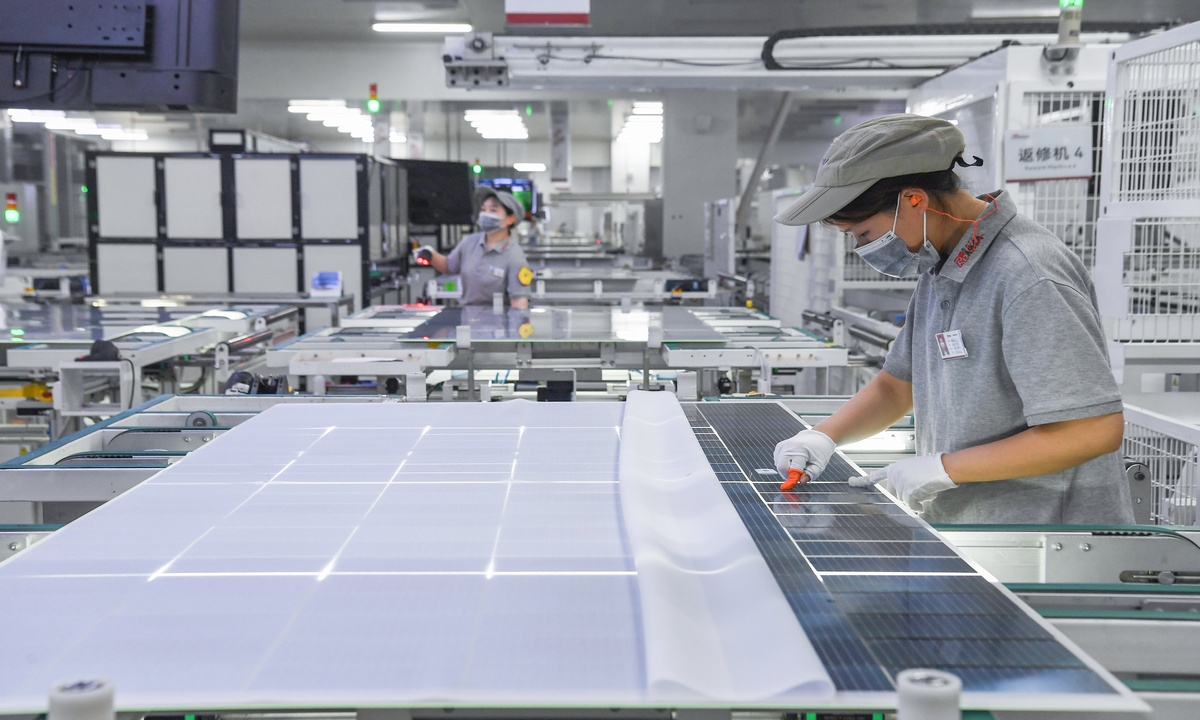
Workers assemble solar photovoltaic modules at a smart manufacturing workshop of Ronma Solar Energy Group in Jindong district of Jinhua city, East China's Zhejiang Province, on July 28, 2026. Photo: VCG
    Workers assemble solar photovoltaic modules at a smart manufacturing workshop of Ronma Solar Energy Group in Jindong district of Jinhua city, East China's Zhejiang Province, on July 28, 2026. Photo: VCG
China saw robust exports in electric vehicles (EV), lithium batteries and photovoltaic products, known as the "new three," in the first half of this year. More notably, robotics, artificial intelligence (AI) and innovative drugs, which represent the future direction of industrial development, are also emerging as new calling cards for China's foreign trade.
However, the impressive performance provoked unease among some Western media outlets and politicians. Some have deliberately portrayed China's rapid industrial development and strong competitiveness as a result of government subsidies, pushing the false claim that subsidies have created overcapacity and those low-priced Chinese products are flooding global markets. Such fallacies, which simply equate industrial subsidies with overcapacity, are not only logically flawed but also factually groundless.
In practice, many countries adopt industrial policies tailored to their national conditions and development needs, such as providing research and development (R&D) subsidies for emerging industries and risk related subsidies for agriculture.
Well-designed industrial subsidies can help address market failures, promote technological innovation and environmental protection, reduce poverty and support balanced development, rather than cause so called "overcapacity."
Multiple reports by the United Nations Conference on Trade and Development have noted that the number of industrial policies worldwide has grown rapidly over the past five years, with R&D subsidies, tax incentives and low interest loans for emerging industries becoming common international practices.
Forcibly linking industrial subsidies to "overcapacity" is, in essence, a political manipulation based on double standards. The US, for example, plans to provide $750 billion in various subsidies from 2022 to 2031 under its Inflation Reduction Act. Subsidized EVs are subject to requirements such as production and sales in the US or North America, effectively excluding other WTO members. US industrial subsidies for AI are even greater than those of all other countries combined.
Similarly, according to incomplete statistics, the European Commission is expected to provide more than 1.44 trillion euros ($210 billion) in various subsidies between 2021 and 2030. The EU's Industrial Accelerator Act links local content directly to financial support through "Made in EU" requirements, creating serious investment barriers and institutional discrimination.
Have these massive subsidies been labeled as causing "overcapacity"? The answer is no. While claiming that China's industrial subsidies lead to so-called overcapacity, these countries are themselves providing massive subsidies to their own industries. Such double standards amount to selective accusations targeting China, aimed at politicizing trade and economic issues and weaponizing industrial policy.
At a deeper level, accusations that "China's industrial subsidies cause overcapacity" are merely a pretext, reflecting growing anxiety and fear over the rising competitiveness of Chinese industries.
Looking back at the repeated hype in Western media, the criticism has consistently targeted China's most globally competitive industries, including new-energy vehicles, photovoltaics and power batteries. This exposes the real intention of shifting the blame for their own lagging industrial development onto China while stepping up restrictions against Chinese industries.
China's breakthroughs in these industries have been driven by advances in homegrown technologies, complete industrial and supply chains, and robust market competition, rather than by policy subsidies as some have claimed.
In recent years, China has taken multiple steps to regulate and improve its subsidy policies, from reviewing and correcting inappropriate local subsidies to exploring a unified negative list mechanism for local fiscal subsidies. China applies subsidies equally to all market entities, including foreign invested enterprises, strictly follows WTO rules, and continues to improve the compliance, effectiveness and transparency of its subsidy policies.
Rather than fabricating and hyping baseless claims about subsidies and obsessing over building trade barriers, certain Western media outlets and politicians should focus on addressing their own weaknesses and increasing investment in research and development. They should embrace healthy market competition with an inclusive mindset, promote mutual benefit through greater openness, and win markets and drive progress through genuine innovation.
This was compiled and translated by the Global Times English edition based on an article published in the "Chisu Jinsheng" economic commentary column of the People's Daily on August 10, 2026.

Current article:http://og6nt5.panningbuquanchencaibingzhang.cyou/lhf/jq8.html

Published on:03:21:39


相关阅读 Populist Slovak ex-PM signs deal with 2 other parties to form new government在抖音电商下单10天未发货店铺已下架产品怎么处理滥发信息,误导消费威少正式宣布退役!效力7队征战18个赛季 多项数据创历史纪录【仓单】8月26日上期所沪锌期货仓单较上一日下降376吨东方财富财经早餐 8月25日周二Delta posts $1.11 billion profit for third quarter and sees strong holiday bookings엔비디아 반등·국채금리 하락에 3대 지수 ‘활짝’ [뉴욕증시]

文章评论
发表评论

热门文章 地铁“职”通车!2026年济南市“泉城夜聘”济南地铁首届招聘夜市要来啦美国证券交易委员会就Situational Awareness向华尔街银行发出传票AI如何真正进入生产线?“海归汇智”聚焦制造业智能化,AI如何真正进入生产线?“海归汇智”聚焦制造业智能化Filmmaker Vikram Bhatt Arrested With Six Others in Rs 30 Crore Fraud Case: Reports

最新文章 “小梅”朵朵竞风采 戏曲传承有未来莆田夹漈草堂:深山藏文脉 布衣著春秋 Fire breaks out in Islamabad's shopping mall【观点】光大期货:玻璃市场驱动不足,短期延续底部震荡“她没做错任何事”——前彼得潘扮演者为被控在迪士尼“跟踪”他的走红粉丝辩护纵横谈|让生态环境法典更好守护生活日常

人气排行 玄戒三款新自研芯片上央视!小米朱丹:三芯齐发解决强不强、全不全仅次于乔丹,米切尔已连续7场季后赛系列赛G1砍30+得分贝索斯离婚,世界上最富有的王位或所有权的改变【现货】8月26日各地区纯碱现货价格汇总姚明谈篮球名人堂:要知道我们从哪里来ヴィクトリア・ベッカム、深めスリット入り真っ赤なドレスで色気ダダ漏れ セレブな美男美女夫婦2ショット1300万元赠票来啦!福彩快乐8双重福利同步开启Coast Guard rescues 4 Canadians from capsized catamaran off North Carolina